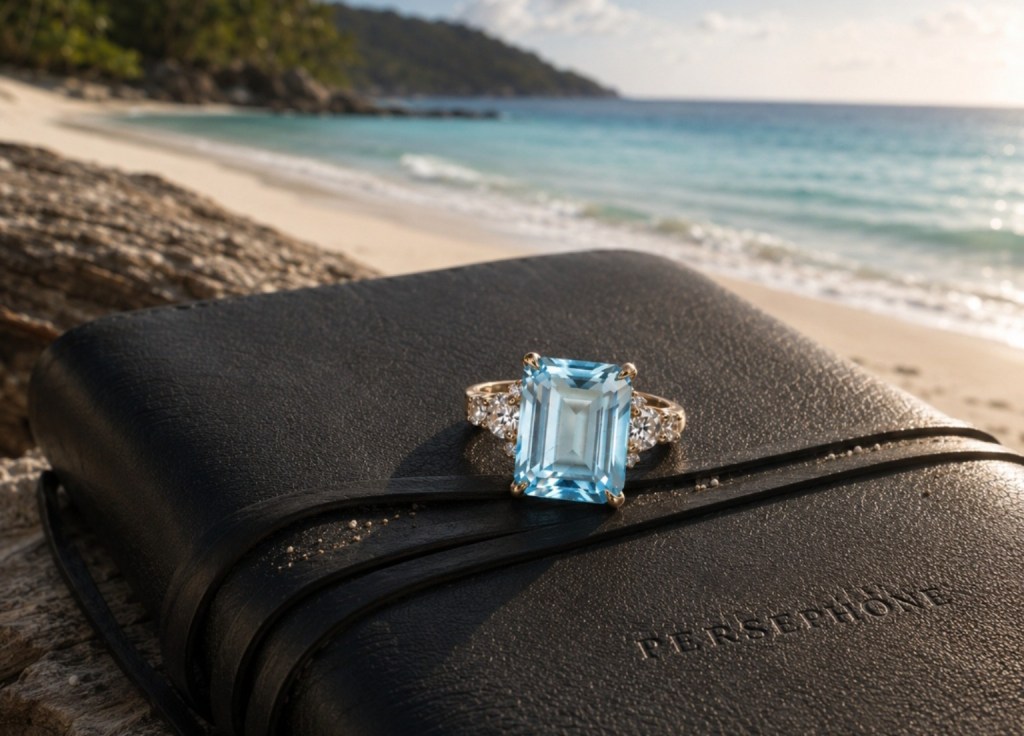
Buying a ring has always carried a certain romance. Whether it marks an engagement, commemorates an anniversary or simply celebrates a personal milestone, the jewellery itself often receives the greatest attention. Yet one of the most important details is the fit.
A ring that is even one millimetre too small can refuse to pass over the knuckle. One that is a fraction too large may slip unnoticed from the hand, never to be seen again.
Fortunately, determining your ring size no longer requires a visit to a jeweller because you can actually measure your ring finger with a few household items. We recommend, however, that you visit a jeweller.
Two Reliable Ways to Measure Your Ring Size
There are two methods commonly recommended by professional jewellers. One measures your finger directly; the other relies on a ring you already own.
Method One: Measure Your Finger
If you do not have a ring that already fits the intended finger, this remains the simplest approach.
Begin by cutting a narrow strip of paper approximately 10 centimetres long, or use a piece of non-stretch string. Wrap it comfortably around the base of the finger—not so tightly that it compresses the skin, but snug enough to replicate how a ring should feel during everyday wear.
Mark the point where the ends overlap to complete the circle. Lay the strip flat against a ruler and measure the distance from the starting edge to the mark in millimetres. This measurement represents your finger’s circumference and forms the basis for determining your ring size.
Accuracy matters. Measuring to the nearest millimetre can make the difference between a comfortable fit and one that is either painfully tight or frustratingly loose.
Method Two: Measure a Ring That Already Fits
If you already own a ring that fits perfectly on the same finger, this method generally produces the most reliable results.
Place the ring on a flat surface and position a ruler across its centre. Measure only the inside distance from one inner edge to the opposite inner edge. Ignore the thickness of the metal itself; only the interior opening should be measured.
This figure, known as the inner diameter, can then be matched to a standard sizing chart.
International Ring Size Conversion
The following chart converts measurements into the most widely recognised sizing systems used by jewellers around the world.
| Inner Circumference | Inner Diameter | US & Canada | UK & Australia |
|---|---|---|---|
| 44.2 mm | 14.1 mm | 3 | F |
| 46.8 mm | 14.9 mm | 4 | H½ |
| 49.3 mm | 15.7 mm | 5 | J½ |
| 51.9 mm | 16.5 mm | 6 | L½ |
| 54.4 mm | 17.3 mm | 7 | O |
| 57.0 mm | 18.1 mm | 8 | Q |
| 59.5 mm | 18.9 mm | 9 | R½ |
| 62.1 mm | 19.8 mm | 10 | T½ |
| 64.6 mm | 20.6 mm | 11 | V½ |
| 67.2 mm | 21.4 mm | 12 | Y |
Why Ring Sizes Change Throughout the Day
Perhaps surprisingly, your fingers are not a constant size.
Body temperature, weather, hydration and daily activity all influence the circumference of your fingers. A ring that feels comfortable during a cool morning may become noticeably tighter after an afternoon spent outdoors.
For the most dependable measurement, jewellers recommend taking your measurements late in the day, when your fingers have reached their natural size. Avoid measuring immediately after exercise or when your hands are unusually cold, as temperature extremes can distort the results.
People with pronounced knuckles should also measure both the base of the finger and the knuckle itself. Selecting a size between these two measurements typically offers the best balance, allowing the ring to pass comfortably over the joint while remaining secure once worn.
The style of ring should also be considered. Wide bands—particularly those exceeding six millimetres in width—occupy more surface area against the finger and naturally feel tighter than slender bands. Many jewellers therefore recommend choosing half a size larger for wider designs.
When You Are Between Sizes
One question arises more often than almost any other: should you size up or down?
In most cases, choosing the slightly larger size is the safer option. A skilled jeweller can usually reduce the size of many rings with relative ease, whereas enlarging a ring—particularly one featuring gemstones, intricate engraving or eternity settings—can be considerably more difficult and, in some cases, impossible.
A comfortable fit should allow the ring to slide over the knuckle with gentle resistance while remaining secure enough that it does not rotate excessively or slip from the finger during everyday wear.
A Small Measurement with Lasting Importance
Jewellery is often designed to last a lifetime. Whether it is an engagement ring, a wedding band or a treasured gift, taking a few extra minutes to measure carefully can prevent unnecessary resizing, returns and disappointment.


Leave a Reply